Before buying vacant land, understanding legal access is critical. Learn the differences between road frontage, easements, and informal permission—and how poor access can derail financing, permits, and resale.
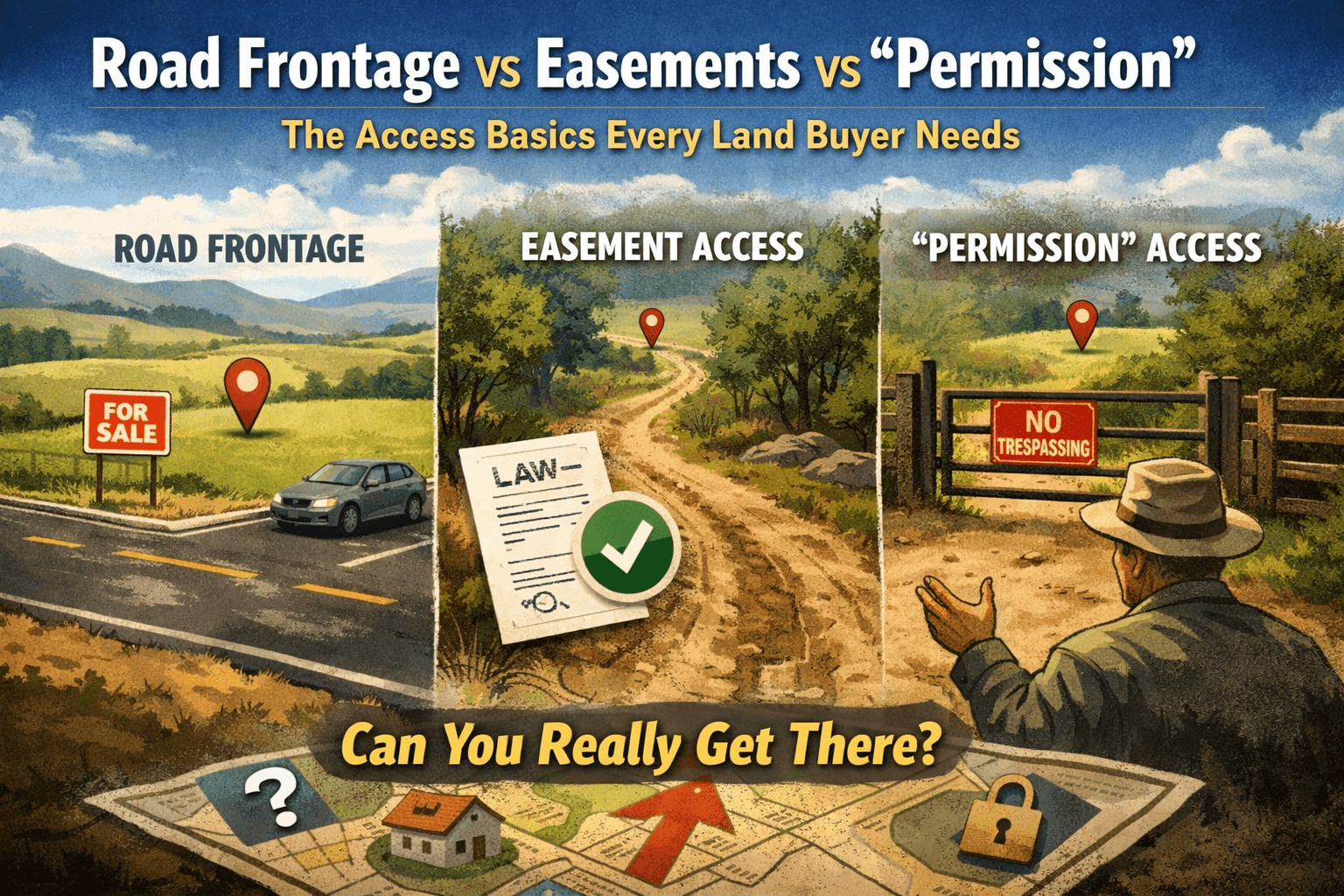
The Access Basics Every Land Buyer Needs
Vacant land has a way of looking simply. A few photos, a pin on a map, a great price.
Then reality shows up—usually in the form of one quiet question:
Can you legally and reliably get to it?
Because “I can reach it” and “I have legal access” are not the same thing. One is a weekend trip. The other is a property you can finance, build on, insure, and resell without drama.
This is Part 1 of a short series on land access—what it is, how to verify it, and how to protect yourself in the offer.
If you want the shortcut: send LandSentry a listing link or APN/parcel ID and ask for an access screen before you write an offer. LandSentry is built for exactly this moment—when you’re interested, but you don’t want to get trapped.
---
Why Access Is the First Domino
Access doesn’t just determine whether you can visit the property. It controls:
- Whether the county will issue permits
- Whether a lender will finance it (many won’t without documented access)
- Whether a title company can insure it cleanly
- Whether contractors can reach it (well rigs, septic trucks, concrete, gravel)
- Whether your future buyer pool is huge… or cash-only
---
The Three Types of Access People Confuse
1) Road Frontage (Cleanest, Simplest)
Road frontage means the parcel touches a public road (or a private road with clear, recorded rights and maintenance agreements).
Why buyers love it:
Still verify:
Translation: frontage is great—but it’s not a blank check.
---
2) Easement Access (Common and Totally Fine—When It’s Real)
An easement is a recorded legal right to cross someone else’s land—often for ingress/egress.
Many excellent properties rely on easements. The issue isn’t “easement = bad.” The issue is bad easements—vague, incomplete, or not connected.
What “good” looks like:
Common traps:
---
3) “Permission” Access (Friendliness Is Not a Legal Right)
This is the dangerous one:
“The neighbor said we can just drive through.”
That’s not access. That’s temporary goodwill.
Neighbors sell. Relationships change. Gates appear. And a lender will not finance “permission.”
If your plan depends on someone staying agreeable forever, you’re not buying access—you’re buying risk.
---
“But There’s a Road on the Map…”
Maps are useful. They’re also deceptive.
GIS and satellite imagery can show:
A clean access decision requires two separate confirmations:
You need both.
---
The Quick Gut-Check (Before You Waste a Weekend)
If a parcel is priced well below the area’s typical land value, it’s often because of one of these:
Access is the easiest to miss early—and one of the hardest to fix later.
---
The Soft Close (The Right Kind of “Tease”)
If you’re looking at a parcel and thinking:
“It’s probably fine… but I’m not 100% sure.”
That’s your signal.
Before you write an offer, get an access review. A quick advisory check can save you: